Most organizations start with a website, and for many that is all they need. But as operations grow, some teams find they are using their website, spreadsheets, email, and several separate apps to keep work moving. At that point, the question becomes whether a website is enough or whether software designed around your operations would help.
Website versus operational software
A public website is primarily about communication. It tells visitors who you are, what you offer, and how to contact you. It might include forms, a blog, or online booking, but its main audience is the public.
Operational software supports the work your team does every day. Its users are often staff, clients, members, or students who sign in to complete tasks, track progress, or access information meant only for them. Instead of describing your services, it helps deliver them.
Common examples
Client or member portals. Secure areas where people sign in to view documents, invoices, project updates, or messages.
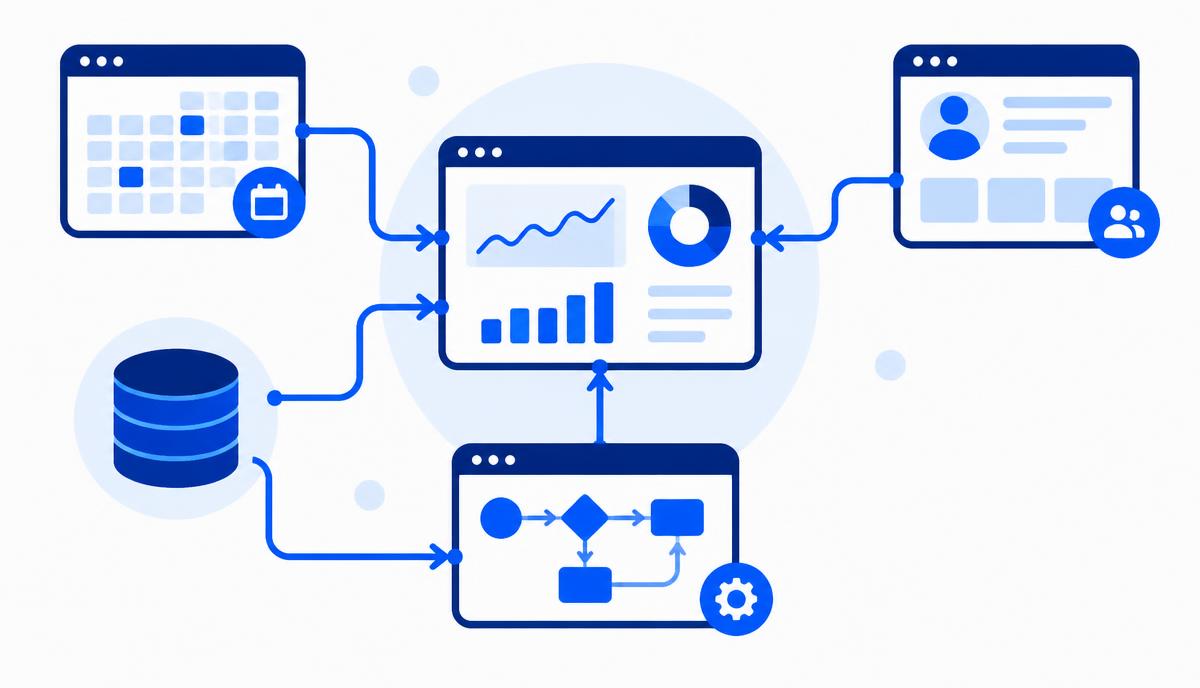
Admin dashboards. A central place for leadership and staff to see activity, manage records, and review reports.
Scheduling systems. Booking connected to staff calendars, approvals, reminders, and follow-up tasks.
Application tracking. Collecting applications for programs, enrollment, or services, then reviewing them and keeping applicants updated on their status.
Automation. Sending confirmations, assigning tasks, or generating reminders automatically instead of by hand.
Integrations. Connecting tools you already use, such as payment providers, email platforms, or calendars, so information flows between them.
Learning platforms. Courses, lessons, and progress tracking for training programs, ministries, or educational organizations.
When existing software is enough
Custom software is not always the right answer. Many established products handle common needs well, and they are often faster and less expensive to adopt. If an existing tool fits about 80 to 90 percent of your process, your team is comfortable with it, and the cost is reasonable, it is usually wise to start there.
When a custom solution could be useful
A custom platform may make sense when:
Your process is unique, and off-the-shelf tools force awkward workarounds.
You are paying for several separate subscriptions that do not communicate with each other.
Staff spend significant time copying information between systems.
You need specific roles and permissions for staff, clients, or members.
You want reporting that reflects how your organization actually measures success.
For example, a hypothetical youth program might track applications in one tool, attendance in a spreadsheet, and parent communication by email. A single platform could bring those pieces together so staff spend less time on administration and more time with participants.
What to expect from the process
Custom software is typically built in phases: discovery, planning, design, development, testing, and launch, followed by ongoing support. Starting with a focused first version and expanding over time helps control cost and ensures the platform is shaped by real use.
Making the decision
The best choice depends on your goals, budget, and how your organization works. A consultation can help you map your current process, identify what existing tools can handle, and decide whether a custom solution would provide meaningful value.
Have a project in mind?
Talk through your goals with McGraw Digital Solutions.